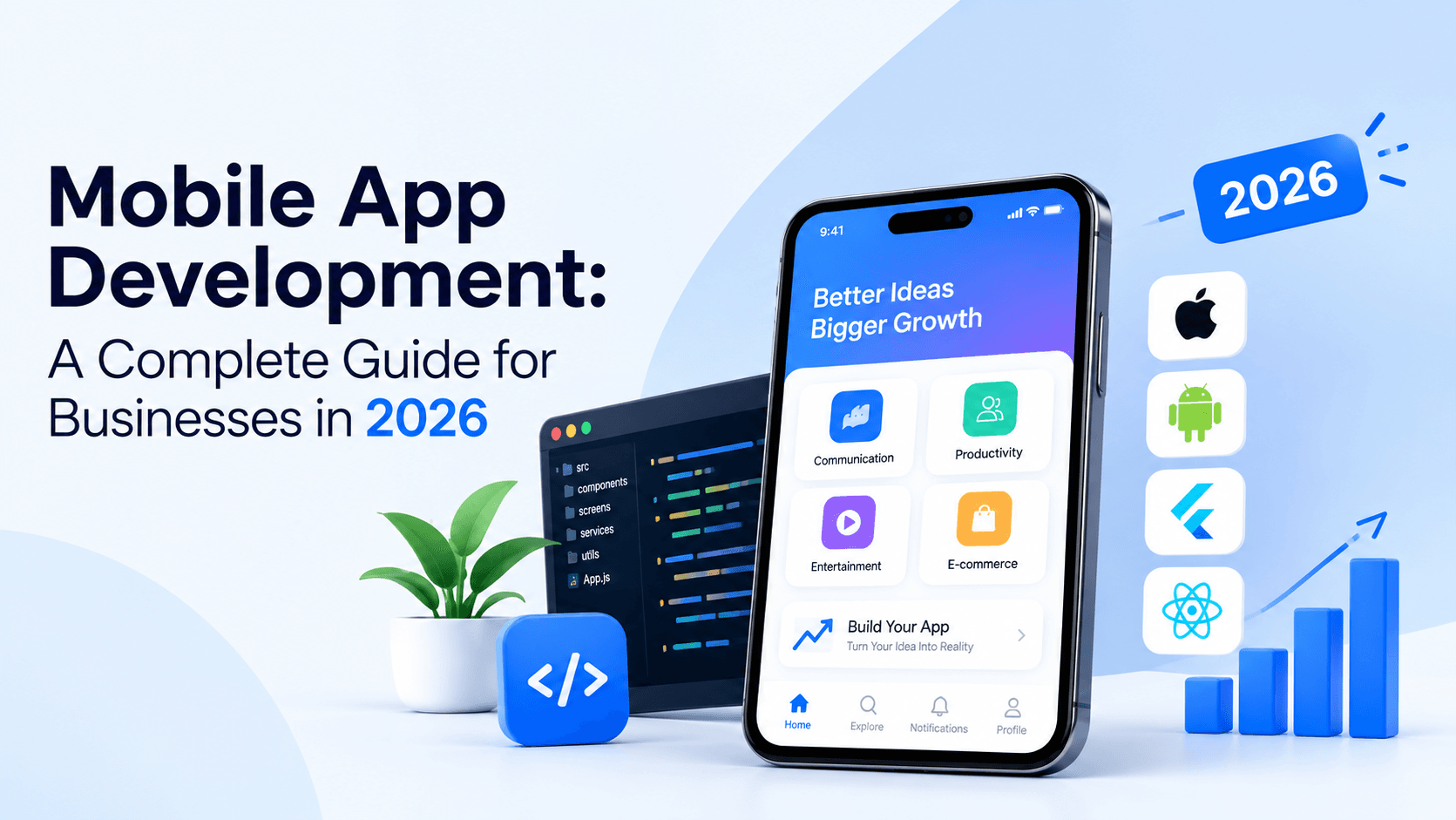
Mobile apps have become an important part of how businesses connect with customers, deliver services, and grow their online presence. From e-commerce and healthcare to education, finance, travel, and entertainment, businesses across industries are investing in mobile app development to provide faster and more convenient experiences.
With increasing smartphone usage and changing customer expectations, having a well-designed mobile app can help businesses improve engagement, strengthen customer relationships, and create new opportunities for growth.
What Is Mobile App Development?
Mobile app development is the process of designing, building, testing, and maintaining applications for smartphones and tablets. These applications can be developed for platforms such as Android and iOS.
A successful mobile application combines several elements, including:
- User-friendly design
- Fast and reliable performance
- Secure data handling
- Easy navigation
- Scalable technology
- Regular updates and maintenance
The development approach depends on the business requirements, target audience, budget, and desired features.
Why Do Businesses Need Mobile Apps?
A mobile app can provide businesses with a direct channel to communicate with their customers. Unlike traditional websites, mobile applications can offer personalized experiences and mobile-specific features.
1. Better Customer Engagement
Mobile apps allow businesses to stay connected with customers through personalized content, notifications, offers, and updates. This can encourage users to return to the app and interact with the brand regularly.
2. Improved Customer Experience
A well-developed application makes it easier for customers to access products, services, bookings, accounts, or information from their smartphones.
Simple navigation and fast loading times can significantly improve the overall user experience.
3. Increased Brand Visibility
An app gives businesses another digital touchpoint where customers can interact with their brand. A professional application can also help create a consistent brand experience across digital platforms.
4. Business Growth Opportunities
Mobile applications can support different business models, including online purchases, subscriptions, bookings, memberships, and in-app services.
Businesses can use these capabilities to create new revenue opportunities and improve customer retention.
Types of Mobile Applications
Businesses can choose different types of applications depending on their goals and technical requirements.
Native Mobile Apps
Native apps are developed specifically for platforms such as Android or iOS. They can provide excellent performance and access to platform-specific features.
Cross-Platform Apps
Cross-platform development allows businesses to create applications that work across multiple platforms using a shared development approach. This can reduce development time and make maintenance easier.
E-Commerce Apps
E-commerce applications allow customers to browse products, place orders, make payments, and track deliveries directly from their smartphones.
Business and Service Apps
Service-based businesses can use mobile applications for appointments, bookings, customer support, account management, and service requests.
Key Features of a Successful Mobile App
The features required for an application depend on the business model. However, some features are commonly important for a successful app.
User-Friendly Interface
The application should have a clean and simple interface that allows users to find what they need quickly.
Secure Authentication
Login and account management should be designed with security in mind. Depending on the application, businesses may use passwords, OTP verification, or other authentication methods.
Push Notifications
Push notifications can help businesses share important updates, promotions, reminders, and personalized messages with users.
Payment Integration
For e-commerce and service applications, secure payment integration can make transactions faster and more convenient.
Analytics and Reporting
Analytics can help businesses understand how users interact with their applications. This information can be used to improve features and customer experiences.
Mobile App Development Process
Developing an application requires proper planning and a structured approach.
1. Requirement Analysis
The first step is understanding the business objectives, target users, required features, and technical requirements.
2. UI/UX Design
Designers create the application's structure, screens, navigation, and user experience before development begins.
3. Development
Developers build the application based on the approved design and technical requirements. A professional app development company can help businesses select the right technology and development approach.
4. Testing
The application is tested across different devices and operating systems to identify bugs, performance issues, and usability problems.
5. Launch
Once testing is completed, the application can be submitted to platforms such as the Google Play Store and Apple App Store.
6. Maintenance and Updates
Mobile app development services do not end after launch. Regular updates, security improvements, bug fixes, and feature enhancements help keep an application reliable and competitive.
How Much Does Mobile App Development Cost?
The cost of developing a mobile application depends on several factors, including:
Number of features
- App complexity
- UI/UX requirements
- Android and iOS platforms
- Third-party integrations
- Backend infrastructure
- Security requirements
- Development and maintenance needs
A basic application may require a relatively smaller investment, while complex applications with advanced features, integrations, and custom backend systems can require a larger development budget.
Businesses should focus on building an application that meets their actual customer and business requirements rather than adding unnecessary features.
How to Choose the Right App Development Partner
Choosing the right development company is an important part of a successful mobile app project. Businesses should consider the company's technical expertise, development process, previous projects, communication, support, and ability to understand business requirements.
A good development partner should focus not only on building the application but also on creating a smooth user experience, scalable technology, and long-term performance.
Businesses looking for custom mobile app development should also check whether the development partner can provide ongoing maintenance, updates, and technical support after launch.
Final Thoughts
Mobile applications can help businesses improve customer engagement, deliver better digital experiences, and create new opportunities for growth. However, successful mobile app development requires more than just writing code. Businesses need proper planning, user-focused design, secure technology, testing, and ongoing maintenance.
Whether you are planning an e-commerce application, business app, service platform, or a custom mobile app, choosing the right development approach can make a significant difference to the final result.
Build Your Mobile App with Mobrilz
Looking for professional mobile app development services? Mobrilz helps businesses build custom mobile applications designed around their specific business goals and customer requirements.
From planning and UI/UX design to development, testing, and ongoing support, Mobrilz can help turn your app idea into a reliable digital product.
Get in touch with Mobrilz to discuss your mobile app development requirements and build a solution tailored to your business.